
THANK YOU FOR SUBSCRIBING


Logistics Tech Outlook Weekly Brief
Be first to read the latest tech news, Industry Leader's Insights, and CIO interviews of medium and large enterprises exclusively from Logistics Tech Outlook


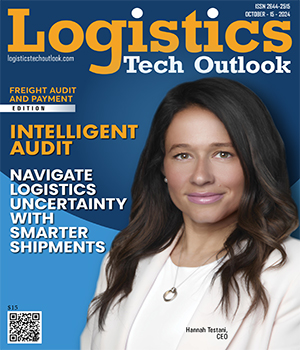
 Hannah Testani, CEO
Intelligent Audit (IA), a global leader in multi-modal transportation spend management, tackles these issues with advanced reporting tools for automated freight auditing, recovery, business intelligence, analytics, and secure carrier payment processing. Their cutting-edge tools not only alert users to errors in real time but also help shippers prevent costly mistakes before they occur.
Consider the case of a large global retailer that ships over 100 million packages annually. When this organization sent a team from Europe to Texas for training, they quickly discovered how even the smallest oversight can lead to significant cost increases. The European team, tasked with entering shipment weights into the transportation management system, mistakenly used commas instead of periods to denote decimals, following their usual formatting. This error caused a five-pound package to be recorded as a 500-pound load, resulting in incorrect carrier selection. Instead of choosing a small parcel carrier, the system categorized these shipments as less-than-truckload, drastically increasing transportation costs. As a result, the retailer received invoices far higher than expected. Despite key metrics like carrier selection and invoicing details appearing consistent for a transportation audit, this simple formatting error nearly resulted in a costly mistake.
Fortunately, the retailer’s logistics were overseen by IA’s innovative anomaly detection tool, which flagged the issue and recognized that the volume and shipment characteristics didn't align with the location’s usual weight and modal preferences.
IA quickly alerted the retailer, enabling them to investigate and correct the error before it led to further financial losses and operational disruptions. This unusual pattern would not have been identified through traditional auditing methods, underscoring IA’s expertise in protecting clients from potential losses and ensuring seamless operations.
“Our technology goes beyond standard tests and identifies new anomalous patterns that shippers don’t or can’t predict,” says Hannah Testani, CEO."
Bringing Intelligence to Shipping
Since 1996, IA has been a trusted partner for businesses looking to optimize their shipping operations and reduce transportation costs. Over the years, it has pioneered the integration of technologies like data-driven analytics and cloud-based tools into logistics.
Today, its comprehensive platform leverages AI to analyze clients’ current business activities, identify trends, and uncover opportunities for improvement. Most importantly, IA ensures enhanced efficiency and cost savings across their supply chains.
IA’s technology integrates data from all modes of transportation—parcel, LTL, ocean, and air freight— consolidating it into a single source of truth for analysis. With the power of deep learning models, IA’s system identifies inefficiencies by continuously scanning data for unusual patterns. This approach has proven highly effective in detecting both internal and external fraudulent activities, as well as potential risks. Through this powerful method, IA empowers businesses to streamline their logistics and address potential issues before they escalate into costly disruptions.
“We analyze the implications of shipping patterns, including the actual cost impacts, and highlight how abnormalities can worsen over time if left unaddressed. Our deep learning models not only detect the issue and identify the root cause but also stop the bleeding,” says Testani."
Innovation in technology continues to transform logistics, and one of the most exciting advancements is generative AI (GenAI). This cutting-edge technology goes beyond traditional data processing by generating new, meaningful content and enhancing automation. For the logistics industry, which often handles complex and varied data, GenAI offers significant potential to boost efficiency and accuracy.
IA is harnessing GenAI in two key ways. First, IA automates email responses, streamlining communication and reducing manual workload. Additionally, it automates invoice processing in regions where electronic data interchange (EDI) is not yet standard. This is particularly valuable because, while EDI invoices are common in North America, many carriers worldwide still rely on manual processes.
In the past, IA used optical character recognition (OCR) technology to handle these cases. Now, it employs GenAI to extract data and fill in any missing details, ensuring that the information presented in their system is comprehensive and detailed, thus enhancing the overall customer experience.

We analyze the implications of shipping patterns, including the actual cost impacts, and highlight how abnormalities can worsen over time if left unaddressed. our deep learning models not only detect the issue and identify the root cause but also stop the bleeding
IA’s network modeling tools are essential for customers looking to adapt effectively to the ever-changing logistics landscape. Designed to help businesses analyze and optimize the supply chain using data-driven insights, these tools enable companies to add new carriers and adjust their operational models based on a clear forecast of how their decisions will impact the future.
For example, one IA client, CVS, publicly shared how they used IA's network modeling tools to determine which stores should invest in larger backroom inventory locations. By precisely answering critical what-if questions, they shifted to fulfilling customer orders directly from these stores rather than relying solely on distribution centers. This strategic move resulted in significant cost savings, as local shipping was far less expensive. Additionally, they complemented these newfound competencies with dedicated ground services, reducing transit times from three days to just one.
Value that Keeps on Growing
IA’s commitment to innovation extends beyond today’s solutions. The company’s ongoing investment in AI-driven tools ensures that clients stay ahead of logistics challenges. At the core of unlocking these transformative features is its data science team, which is continuously exploring how AI can enhance shipping operational efficiency, scalability, and impact.
“Our focus is clear: continuously assess every operational process to determine where AI can make a difference,” states Testani.
This forward-thinking approach ensures that IA continues to push the boundaries of what’s possible in logistics, delivering tangible value to its clients. In a complex and ever-changing logistics landscape, IA’s advanced technology empowers businesses to navigate uncertainty, reduce costs, and elevate the customer experience.
Company
Intelligent Audit
Management
Hannah Testani, CEO
Description
Intelligent Audit (IA) revolutionizes logistics through AI-powered tools, advanced anomaly detection, and generative AI, optimizing shipping operations and reducing costs. IA’s platform enhances efficiency, detects inefficiencies, and empowers businesses with data-driven insights for smarter decision-making.